The WordPress admin interface covers a lot, but not everything. Sometimes you need to make a direct change to one of the site’s files, whether to strengthen security, add custom code, or fix an issue that locks you out of the dashboard.
A quick search will point you toward FTP (File Transfer Protocol) as the way to do this. But what is FTP exactly, and is it still the right choice?
FTP lets you connect directly to the server and access the files that make up your WordPress site. You can edit, add, and delete files and code without going through the admin interface. I use it regularly when troubleshooting client sites or uploading files in bulk.
Below, we’ll cover what FTP is, when to use it, the important difference between FTP and SFTP, and how to connect using the free FTP client FileZilla.
What is FTP and why is it important?
File Transfer Protocol (FTP) is a standard network protocol for transferring files between a client (your computer) and a server. Your site’s files are stored on the hosting company’s server, and FTP gives you direct access to them from your local machine.
There are many reasons to use FTP for your WordPress site:
- Direct installation of plugins and themes.
- Manual removal of themes and plugins when you’re locked out of the WordPress admin.
- Uploading many media files at once instead of one at a time.
- Editing the
.htaccessfile for performance, security, or redirects. - Modifying wp-config.php settings directly on the server.
- Diagnosing and fixing common issues such as compatibility problems, Internal Server Errors, and image upload errors.
- Downgrading WordPress to a previous version.
Many WordPress tutorials and troubleshooting guides will ask you to connect via FTP at some point. Even if you don’t need it right now, knowing how to connect will save you time when the moment comes.
FTP vs SFTP: Which Should You Use?
Before you connect, there’s an important distinction to understand. Plain FTP sends your username, password, and all transferred data as unencrypted text. Anyone monitoring the network can intercept your credentials and gain full access to your site files.
SFTP (SSH File Transfer Protocol) solves this by encrypting everything through an SSH tunnel. Both your credentials and your data are protected in transit. Most reputable hosting providers today default to SFTP and many, including WP Engine and Kinsta, have disabled plain FTP entirely.
If your hosting provider offers SFTP, always use it over plain FTP. The connection process in FileZilla is nearly identical. You just select SFTP in the protocol dropdown.
The good news: from your perspective as a user, the workflow is the same. You connect, browse files, and drag-and-drop. The only difference is the protocol running underneath.
Using FTP Clients
To connect to your server, you need to download an FTP/SFTP client. This software handles the connection and lets you browse, edit, and transfer your WordPress files.
Popular options include Transmit (Mac), CyberDuck (free, Mac & Windows), and FileZilla (free, Mac & Windows). All three support both FTP and SFTP. In this guide, we’ll use FileZilla since it’s free, cross-platform, and straightforward to set up.
How to use FTP to access your site files?
Let’s see how to connect to your hosting server using FTP in four steps…
1. Back up your site
This step isn’t mandatory, but it’s advisable before you start so you understand the risks involved with using FTP. You’re going to make direct changes to site files, and if you’re not careful, you might make irreversible mistakes.
That’s why it’s important to back up your WordPress site first so you can restore files if anything goes wrong.
2. Install FileZilla
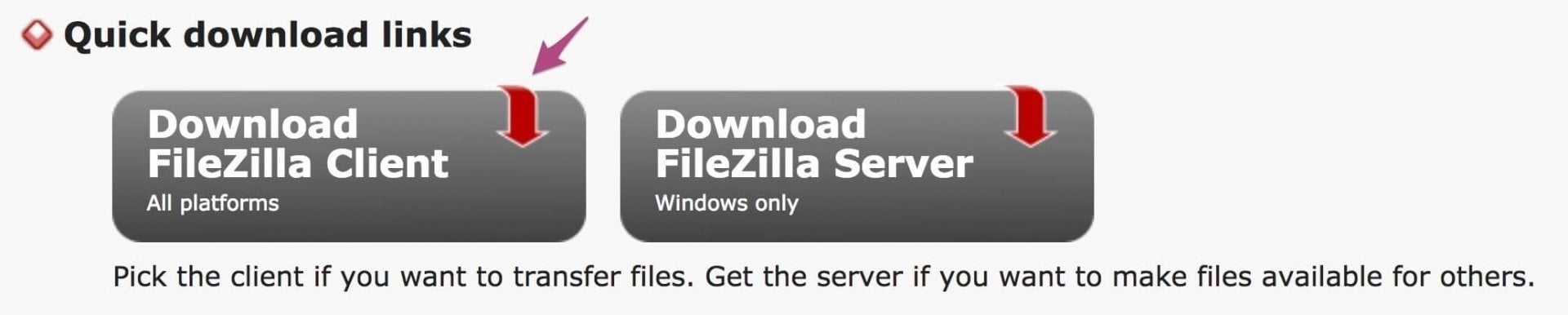
If you haven’t done this already, install FileZilla. Go to their website and click on “Download FTP Client.” Choose the version that fits your operating system (it’s likely detected automatically) and install it like you would any other software.
Once you’re done, run FileZilla; there’s no need for any special settings for it.
3. Connect to the server using FTP
When you open FileZilla, you’ll find a screen similar to the following:
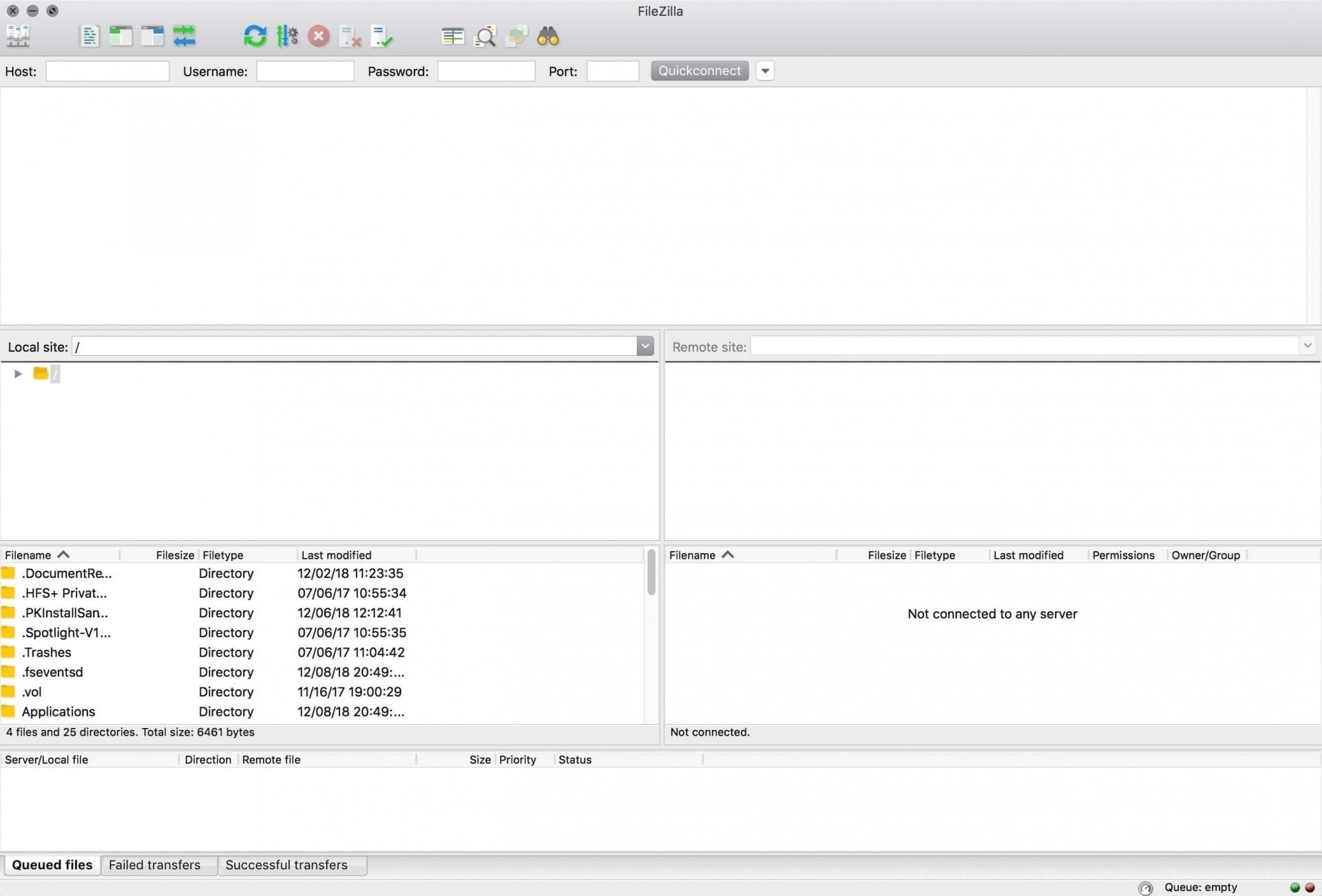
You’ll notice there are several empty fields at the top of FileZilla’s left side: Host, Username, Password & Port. You don’t need to worry about the Port field at this stage, but the first three fields represent your credentials to connect to the server.

To connect to your site using FTP, you’ll need the FTP address of your hosting server, as well as your private username and password. You should have received all the necessary details via email when you purchased your hosting package.
If you don’t have this information, you can contact your hosting company and ask for the details. I’m sure they’ll be happy to assist you, and if not, consider switching to a better hosting company.
If you have access to your hosting company’s control panel (such as cPanel), you can create an FTP user and get all the necessary settings from there.
Either way, once you have the necessary information for connection, enter them into the corresponding fields in FileZilla and click the Quickconnect button. If the details are correct, within a few seconds, you should see a successful connection message:

It’s worth mentioning that you don’t have to enter the details every time; you can save them for quick access through the Site Manager in FileZilla.
Alternatively, you’ll find a small arrow to the right of the Quickconnect button that will display your recent connections for quick access.
4. Manage your WordPress site files
By default, the left side of FileZilla displays the files and folders on your personal computer, and the right side displays the files on the server. To transfer files, all you need to do is drag and drop them from one side to the other.
Once you’ve connected, you’ll generally find your site’s files under the public_html or www directory. If you haven’t made any special changes, the main directory of the site is where you’ll find the wp-admin and wp-includes folders.
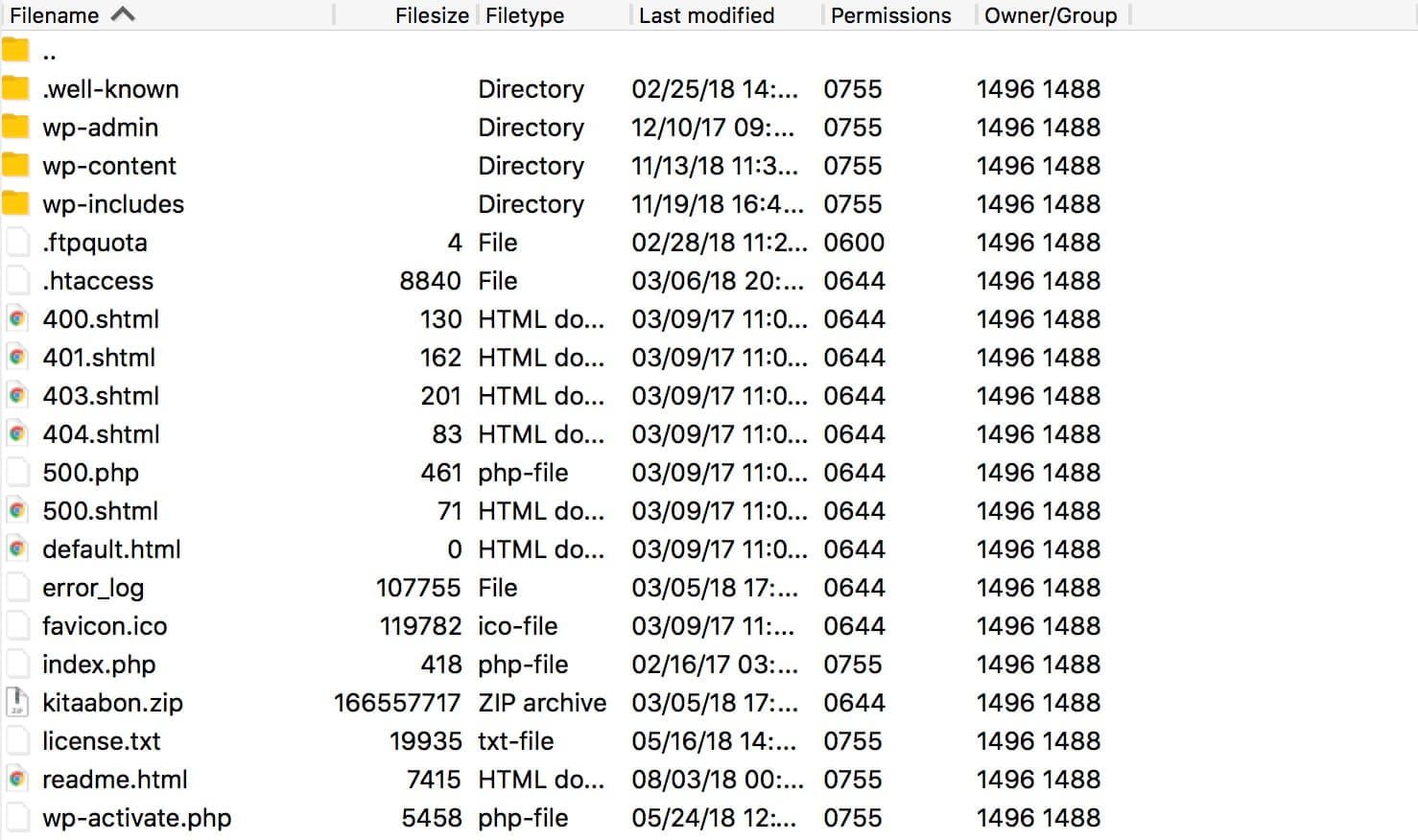 In most cases, the files you want to edit will be located under the
 wp-content directory. This is where the installed themes, plugins, and even the Uploads directory containing your uploaded media files are found.
For instance, if you want to install a new theme, copy the theme files to the wp-content/themes directory. If you want to add or delete a plugin, you can do so in the wp-content/plugins directory.
FAQs
Common questions about FTP and WordPress:
wp-config.php and .htaccess, or remove files that are causing issues.SFTP as the protocol when setting up the connection.Summary
Part of being a confident WordPress user is knowing how to work with files behind the scenes. FTP (and more specifically SFTP) gives you direct access to the files that power your site, which is invaluable for troubleshooting, manual installs, and file management.
To recap: always prefer SFTP over plain FTP for security, use a client like FileZilla, and keep a backup before making any changes. If you have any questions, drop them in the comments below.