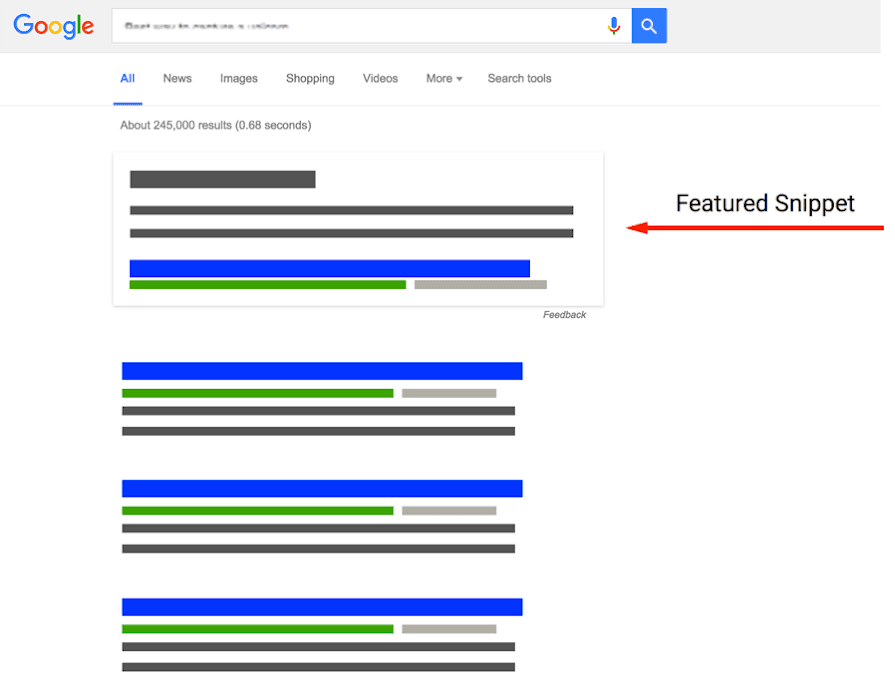
When a user asks a specific question in search, Google may choose to display the result as a special block called a Featured Snippet at the top of the search results window.
This Featured Snippet contains a summary of the answer, taken from a specific page, alongside a link to that page, its address, and the page name.
Featured Snippets, assuming they exist for a specific query, are the first thing users see when they search for a specific word or phrase.
Since 2025, Featured Snippet visibility has declined significantly as Google’s AI Overviews now appear in over 47% of US searches. When AI Overviews appear, they typically replace Featured Snippets. However, Featured Snippets remain valuable for fact-based and transactional queries where AI Overviews do not appear.
In this guide, we will explain what Featured Snippets are, show different types of them, and provide several tips that will help you appear as Featured Snippets in Google search results.
What are Featured Snippets?
Featured Snippets are selected search results displayed at the top of Google’s organic search results, right under the paid results (Ads).
The purpose of these Featured Snippets is to directly answer the user’s query and hence they are also called Answer Boxes. Appearing in Featured Snippets in one sentence means higher exposure for your business in search results.
Several tests and studies confirm the claim about exposure:
- A man named Ben Goodsell reports that click-through rates (CTR) on these Featured Snippets increase from 2% to 8% when they appear in the Featured Snippet format, and the revenue from organic traffic increased by about 667%.
- A man named Eric Enge describes an increase of about 20-30% in traffic to ConfluentForms.com when they held a Featured Snippet for a particular query.
What types of Featured Snippets exist?
In general, there are three main types of Featured Snippets:
1. Paragraph – The answer is displayed as text or text with an image. 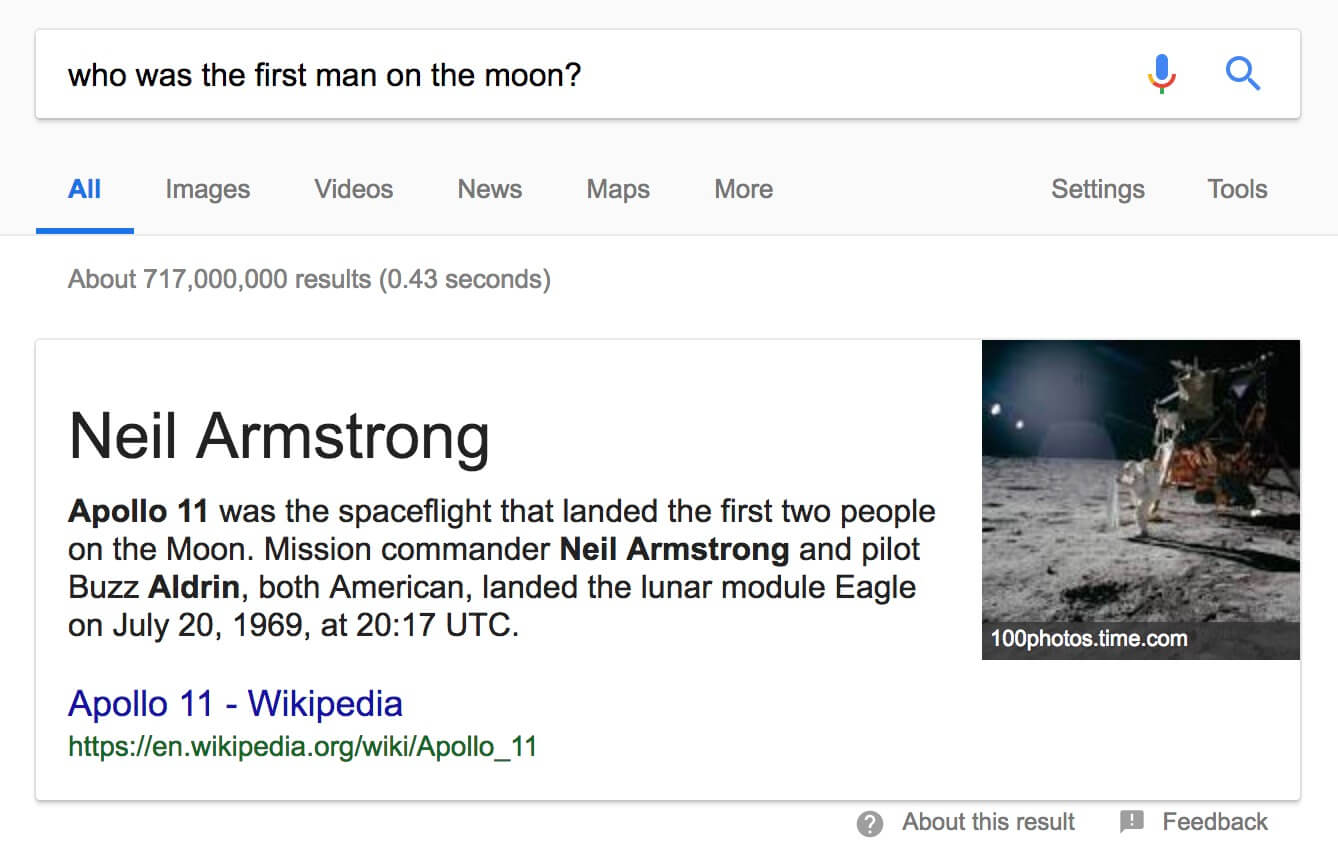
2. List – The answer is displayed as a list. 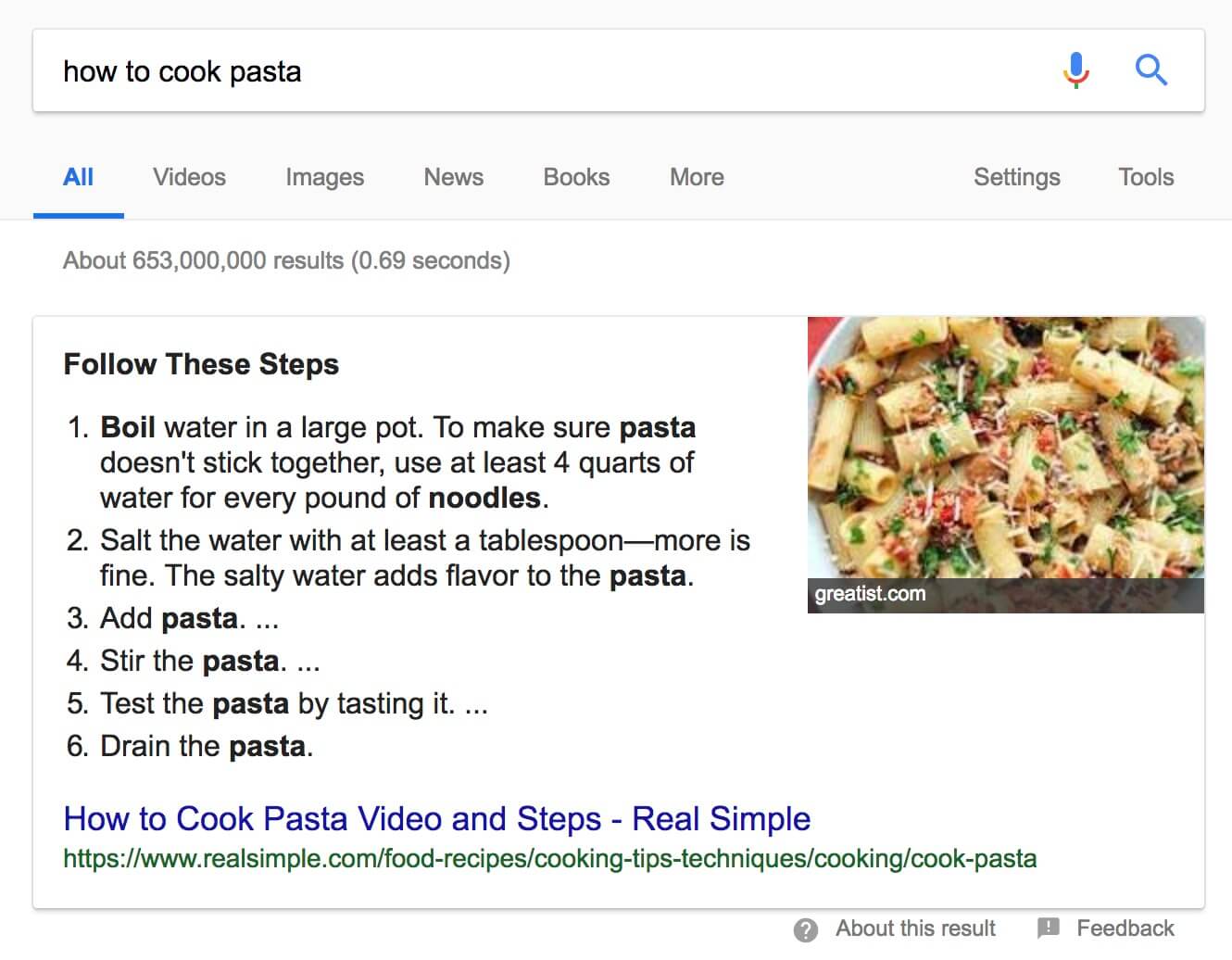
3. Table – The answer is displayed in the form of a table. 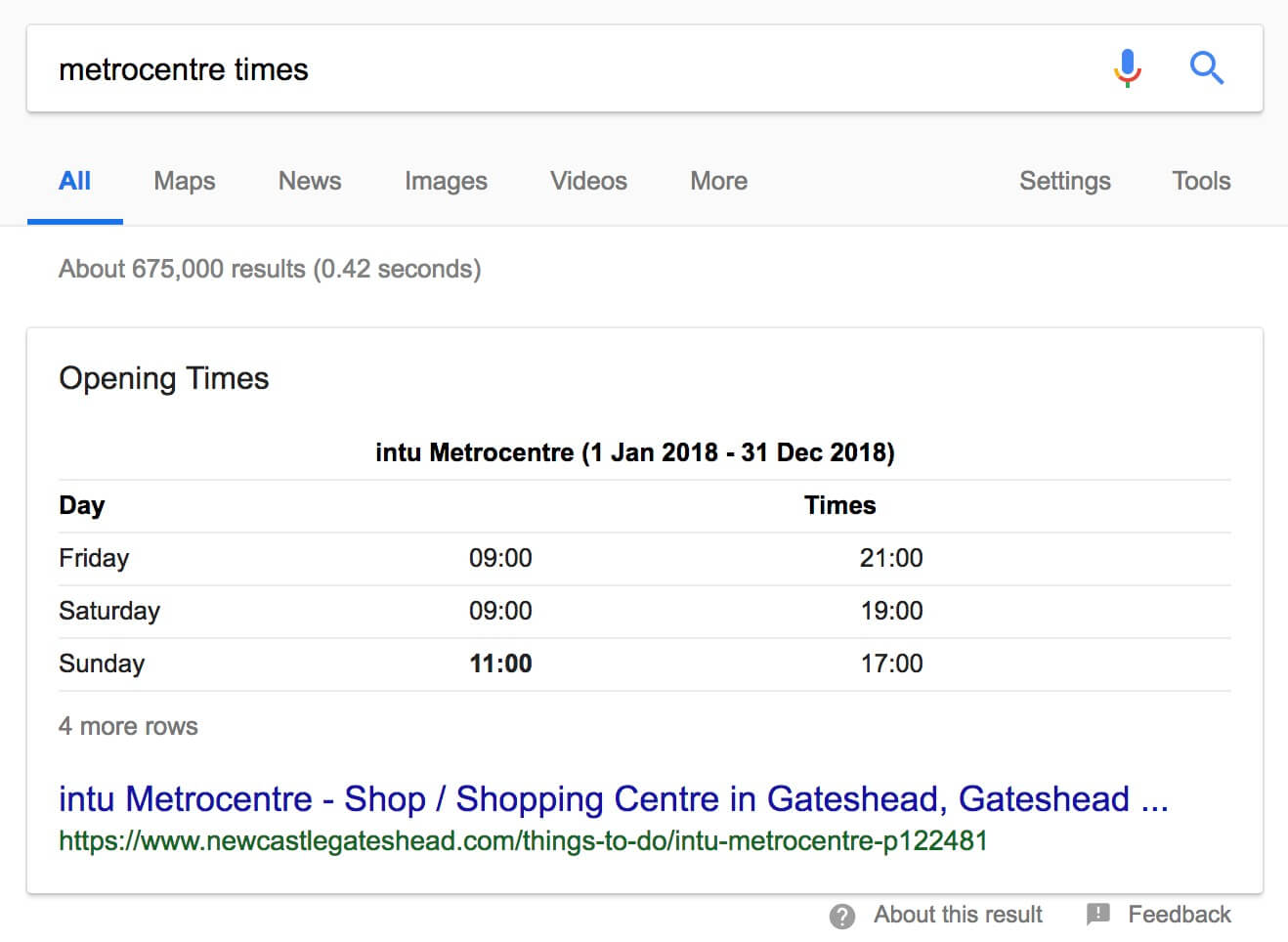
According to online data, the most common Featured Snippet is a paragraph, and it exists tens of percent more than the other two types.
| Type of Featured Snippet | % of all snippets |
|---|---|
| Paragraph | ~70% |
| List | ~19% |
| Table | ~6% |
| Video | ~5% |
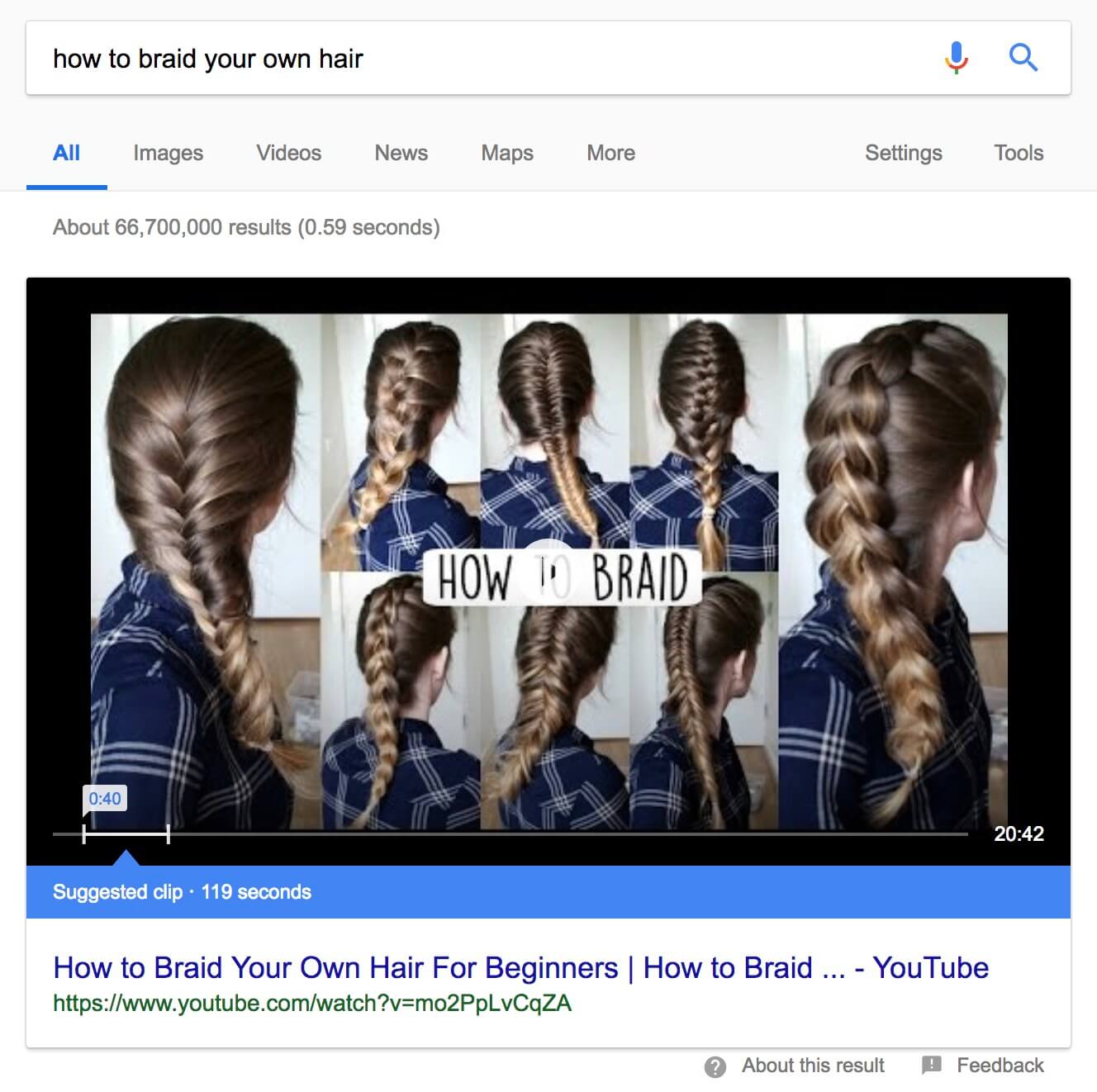
There is also a fourth type: YouTube videos, also called Suggested Video Clips. Clicking on a result of this type jumps you directly to the point in the video that answers your query.
Videos work well as Featured Snippet answers because some questions are hard to impossible to answer in a few words or in text alone.
Here is an example of such a result showing a video as an answer to the query “how to braid your own hair“:
Where does the summary in the Featured Snippet come from?
When Google understands that a user has asked a question, it identifies pages that answer that question programmatically and displays the strongest result as a Featured Snippet at the top of the search results page.
These Featured Snippets differ in appearance from regular search results and are designed to attract the user’s attention when they view the search results on Google.
The summary that appears in the snippet is taken from the content that the user sees when visiting that page.
Like any search result on Google, that Featured Snippet reflects only the opinion of the website owner from which the summary is taken, not Google’s opinion.
Google consistently improves the algorithm to identify the most accurate result for user queries, so you may see different results for queries over time.
By the way, you have the option to add reviews and give feedback on the answer appearing in your question at the bottom of the Snippet via the “Give Feedback” link.
What are your chances of appearing as Featured Snippets?
If you are wondering how to ask Google for your page to appear as a Featured Snippet, know that it cannot be done directly. However, it is certainly possible to perform actions that will increase your chances.
On-Page SEO is the first process to focus on. Beyond that, here are several tips:
- Find questions frequently asked by users related to your business.
- Don’t beat around the bush, be purposeful and answer the question in a concise and clear manner. The number of words for a Featured Snippet is about 50 words, so there is no room for verbosity.
- Expand the content so that it also answers related questions on the same topic.
- Don’t bury the answer in the middle of the page surrounded by a lot of text. Help Google find the answer easily and add the answer near the beginning of the article.
- Use relevant HTML tags and structured data. Proper use of <p>, <ol>, <ul>, and tables will help Google display the answer in the correct format. Also make sure to use proper heading tags to structure your content.
- Focus on phrases and questions where you are ranked in the top positions in organic search.
A study by Ahrefs found that about 99.58% of pages included in Featured Snippets appear in the top 10 positions on Google.
In other words, if you do not appear on the first page of organic search results for a specific query, your chances of appearing as a Featured Snippet for that query are close to zero.
The table below shows the relationship between a result’s position on the first page and the percentage appearing as a Featured Snippet for positions 1-10 in Google:
It’s not surprising by the way that Wikipedia has the most Featured Snippets. If Wikipedia appears as Featured for a specific expression, it will be very hard to beat it, but you are welcome to try.
How to remove a page that appears as a Featured Snippet?
You have several options to control whether your content appears as a Featured Snippet:
Option 1: Block all snippets using the nosnippet meta tag:
<meta name="googlebot" content="nosnippet">Note that this will remove all snippet displays from Google search results for that page, including regular snippets, Rich Snippets, and Rich Cards.
Option 2: Limit snippet length using the max-snippet meta tag:
<meta name="robots" content="max-snippet:0">Setting max-snippet to 0 prevents Featured Snippets while still allowing a regular search result description. You can also set a specific character limit (e.g., max-snippet:160).
Option 3: Block specific sections using the data-nosnippet HTML attribute:
<span data-nosnippet>This text will not be used in snippets.</span>This allows you to prevent specific parts of your page from being used in snippets while keeping the rest eligible.
Featured Snippets and AI Overviews
Since 2025, Google’s AI Overviews have fundamentally changed the search landscape. AI Overviews now appear in over 47% of US searches and trigger on 99.2% of question-based queries.
When an AI Overview appears, it typically replaces the Featured Snippet for that query. This has led to a significant decline in Featured Snippet visibility.
However, Featured Snippets remain relevant for:
- Fact-based queries where a direct answer is more appropriate than an AI-generated summary.
- Transactional searches where AI avoids making direct recommendations.
- Queries in languages and regions where AI Overviews are not yet available.
The optimization paradigm is shifting from traditional SEO toward what is now called Generative Engine Optimization (GEO). The goal is no longer just capturing clicks, but being cited as an AI source – which is becoming the new equivalent of ranking #1.
Focus on “answer-first” content: place a direct, concise answer (40-60 words) in your first paragraph. This format works for both Featured Snippets and AI Overview citations.
FAQs
Common questions about Featured Snippets:
Summary
Earning a Featured Snippet in Google’s organic search results requires effort and research, and results are not guaranteed. However, when you do earn one, the benefits are significant:
- These results will lead to much higher relevant traffic to your site.
- They will help you build credibility and reputation in the specific field or topic – a key factor in E-E-A-T evaluation.
- You position your content for AI Overview citations, which are becoming the future of search visibility.
As the search landscape shifts toward AI-generated results, optimizing for Featured Snippets also prepares your content for Generative Engine Optimization (GEO). The skills and content structures that win Featured Snippets are the same ones that earn AI citations.