By default, WordPress does not show the featured image (thumbnail) in the list of posts in the admin panel. With a small code snippet, you can add a new column that displays the post thumbnail next to the title, author, or date columns.
This tweak is especially helpful for editors and content managers who rely on visual cues to identify posts quickly.
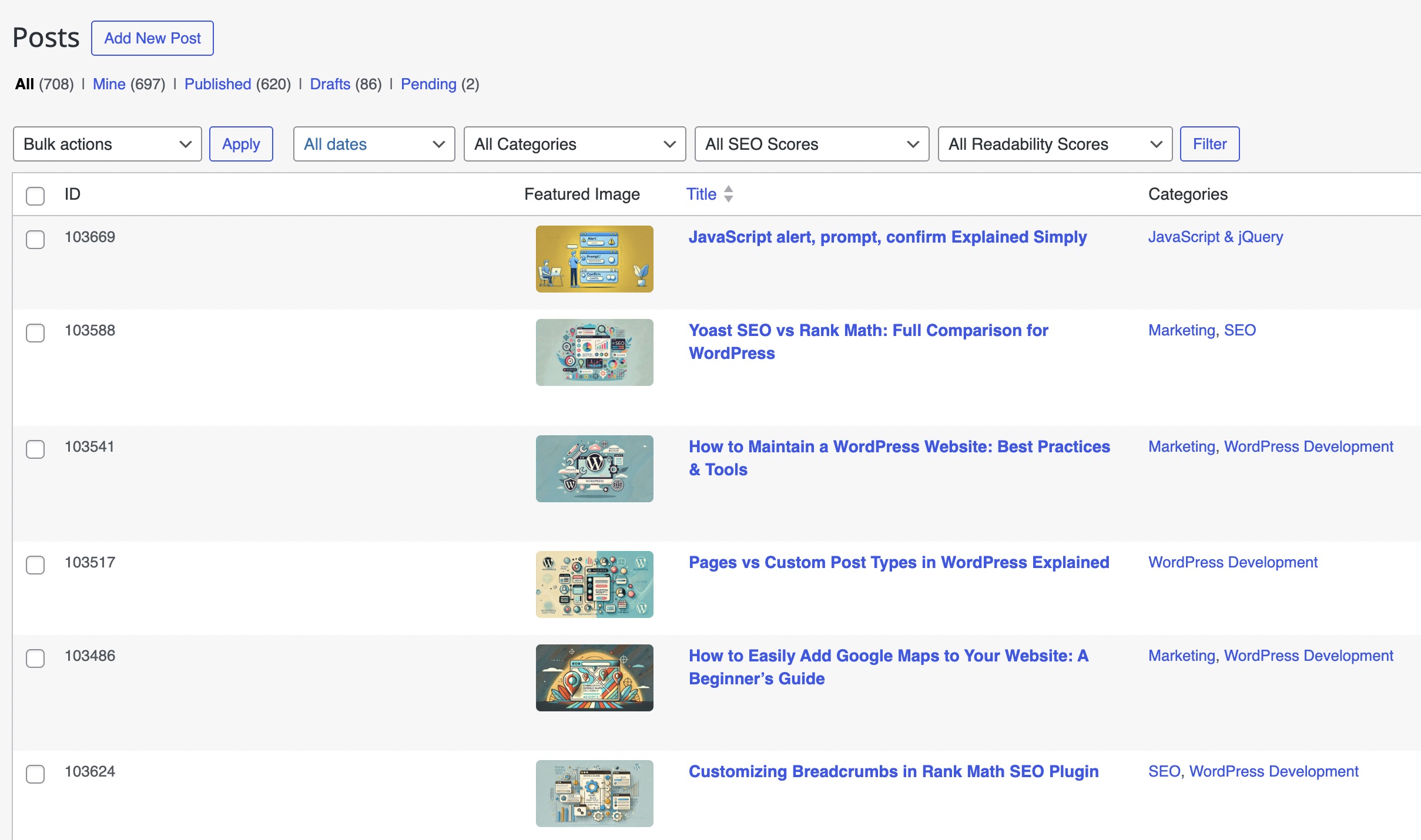
Add the Featured Image Column to the Admin Post List
To add the featured image column, you need to hook into two WordPress filters and one action: manage_posts_columns to register the column, manage_posts_custom_column to render the image, and admin_head to style it.
add_filter( 'manage_posts_columns', 'add_featured_image_column' );
function add_featured_image_column( $columns ) {
    $new = [];
    foreach ( $columns as $key => $value ) {
        if ( $key === 'title' ) {
            $new['featured_image'] = __( 'Featured Image' );
        }
        $new[ $key ] = $value;
    }
    return $new;
}

add_action( 'manage_posts_custom_column', 'display_featured_image_column', 10, 2 );
function display_featured_image_column( $column, $post_id ) {
    if ( $column === 'featured_image' ) {
        $thumbnail = get_the_post_thumbnail( $post_id, [ 60, 60 ] );
        echo $thumbnail ?: '-';
    }
}

add_action( 'admin_head', 'featured_image_column_style' );
function featured_image_column_style() {
    echo '<style>
        .column-featured_image { width: 80px; text-align: center; }
        .column-featured_image img { border-radius: 4px; }
    </style>';
}
Add this code to your child theme’s functions.php file or a site-specific plugin. Never edit the parent theme directly – your changes will be lost on the next theme update.
Change the Image Size
You can control the thumbnail size by adjusting the parameters in the get_the_post_thumbnail() function.
The second argument accepts either a registered image size (like 'thumbnail', 'medium', or a custom image size) or an array with custom dimensions.
For example, to display a 100×100 image instead of 60×60:
$thumbnail = get_the_post_thumbnail( $post_id, [ 100, 100 ] );To use a registered image size from your theme:
$thumbnail = get_the_post_thumbnail( $post_id, 'admin-thumb' );Make It Work for Custom Post Types
If you want to apply the same column to a custom post type (e.g., portfolio), replace the filter and action with their CPT-specific versions:
add_filter( 'manage_portfolio_posts_columns', 'add_featured_image_column' );
add_action( 'manage_portfolio_posts_custom_column', 'display_featured_image_column', 10, 2 );
The pattern is
manage_{post_type}_posts_columnsfor the filter andmanage_{post_type}_posts_custom_columnfor the action. Replace{post_type}with your CPT slug.
FAQs
Common questions about displaying featured images in the WordPress admin:
get_the_post_thumbnail() which loads already-generated thumbnail sizes. Since WordPress creates thumbnails when you upload an image, no additional image processing happens when loading the admin post list.manage_{post_type}_posts_columns.manage_edit-post_sortable_columns and modifying the query with pre_get_posts to check for _thumbnail_id meta.display_featured_image_column function.manage_pages_columns and manage_pages_custom_column instead of the post-specific filters. The callback functions remain the same.Summary
This small enhancement can improve content management significantly, especially for image-heavy sites or portfolios. By using native WordPress hooks, you get a fast, efficient solution without relying on extra plugins.
Want to display post IDs in the admin too? Check out the guide on showing post IDs in the WordPress dashboard without a plugin.